
People have been dancing to music only they can hear for over a hundred years. The idea started as a radio experiment, became a festival trick, and is now a favourite way to party in places where loud speakers are not welcome. Here is how it happened.
Wired and radio
Earphones plugged into a radio set. One signal, one source.
FM radios
Small FM receivers and headphones. Cheap, but easy to tune out.
Multi-channel RF
Dedicated headsets and transmitters, with more than one channel.
LED and certified kits
Lit-up headsets, UHF range up to 500 m, apps for fast hand-out.
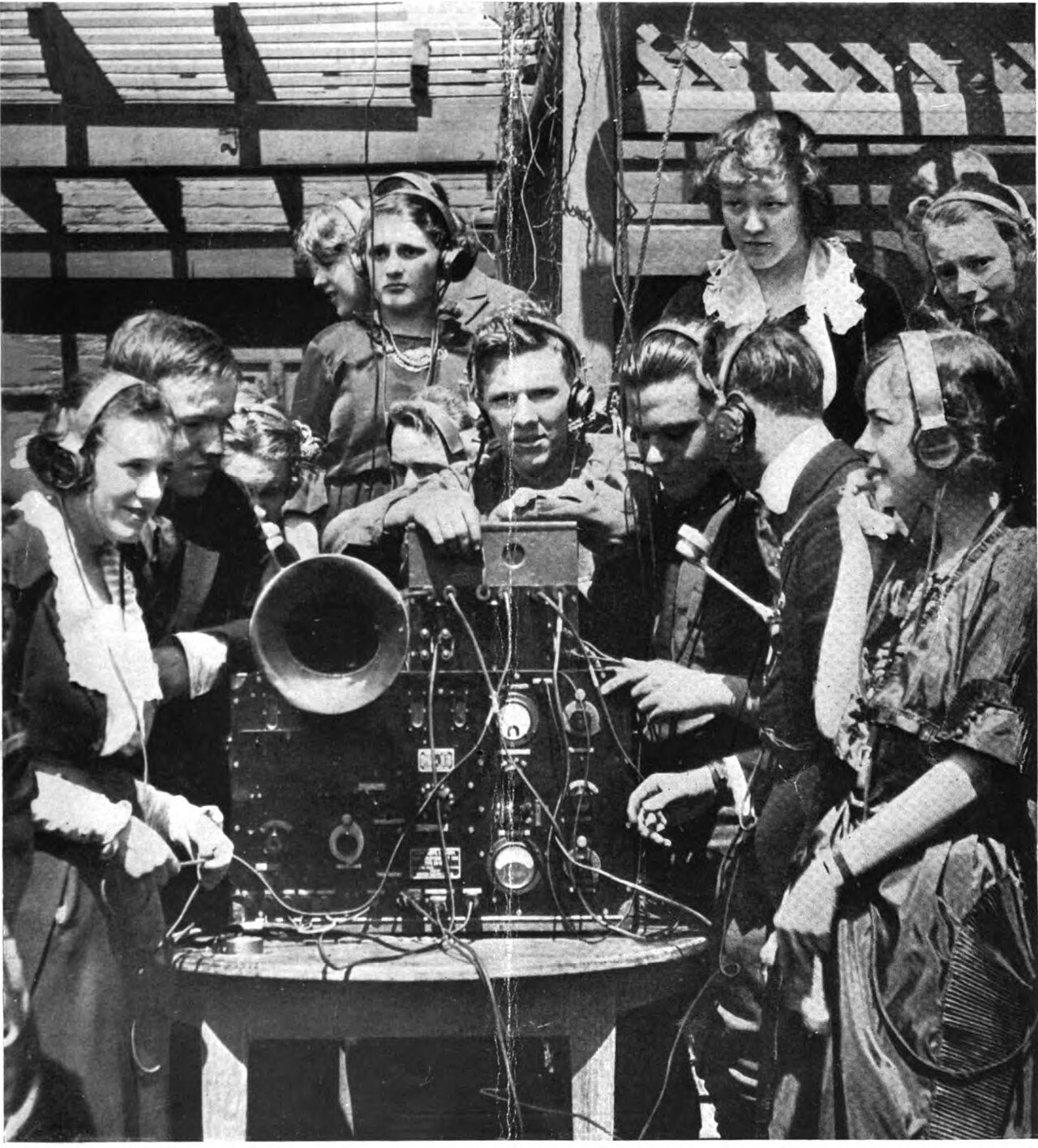
1920
The radiophone dance
An Atlanta social club holds a “radiophone dance”. Guests wear earphones and dance to a band playing across town, sent to them by radio. It is the earliest example we know of people dancing to music only they can hear.
Imagined in stories and film
Japanese artist Osamu Tezuka writes a story about a party where everyone wears headphones. In 1969 the Finnish film Time of Roses, set in 2012, shows couples dancing with wired headphones in a quiet restaurant. The idea is already in the public imagination.
Glastonbury after the curfew
Glastonbury Festival links its site radio station to a screen beside the Main Stage. After the sound curfew, festival-goers tune their own portable radios to watch late-night football and music videos in near silence.
A concert for three
Electronic artist Erik Minkkinen in Paris streams a live concert from his closet over the internet to three listeners in Japan. It sparks “le placard”, a network that lets anyone set up a streaming and listening room.
The first headphone concert
On 17 March 1999, The Flaming Lips play to a live audience at Trees in Dallas, Texas. Each guest gets a small FM radio and headphones. It is billed as a world first, and it teaches the industry about batteries, tuning and crowds.
A silent gig in Cardiff
BBC Live Music stages a “silent gig” at the Chapter Arts Centre in Cardiff. A live band and several DJs are heard only through headphones.
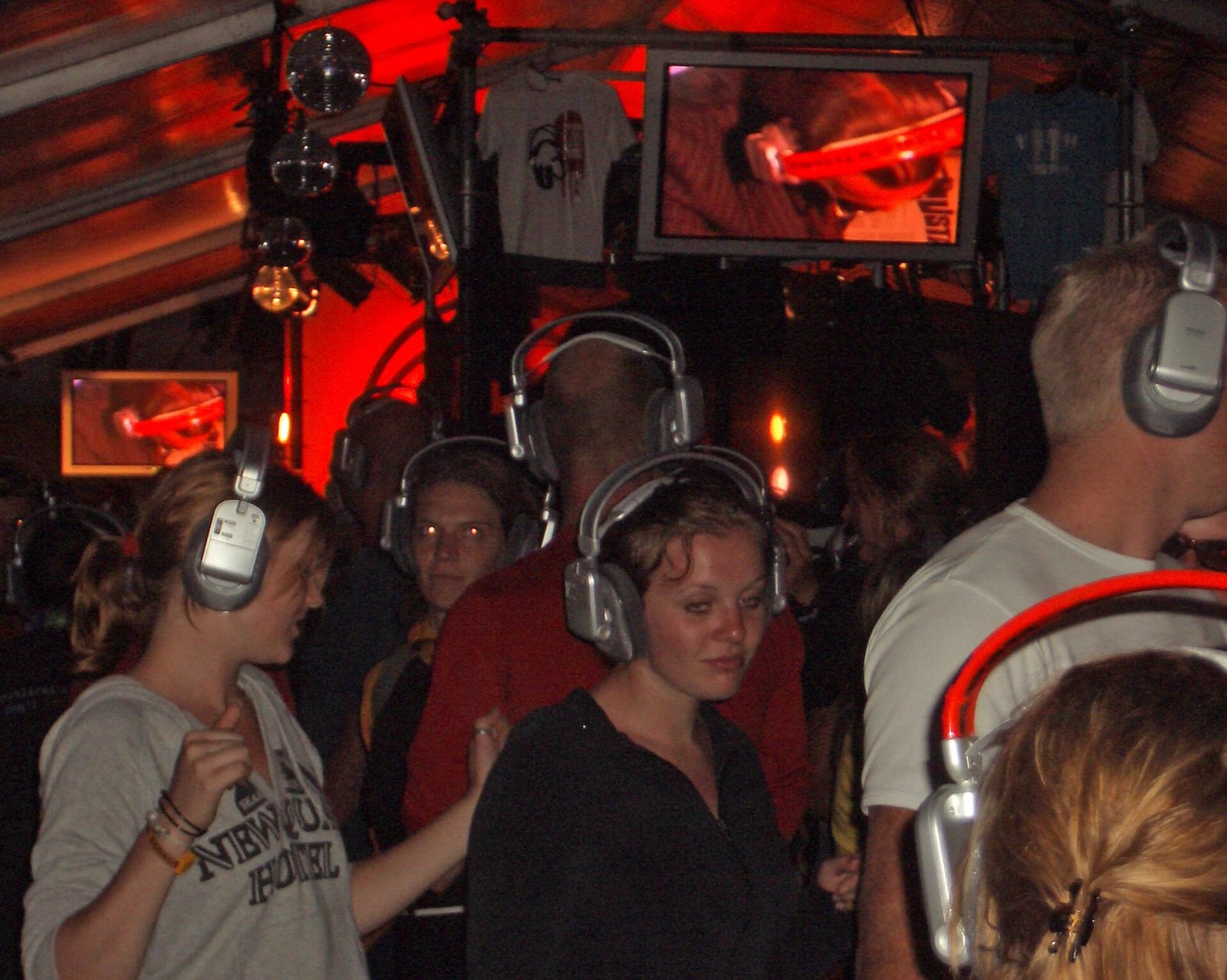
2002 to 2004
Art meets the dance floor
Artist Meg Duguid presents “Dance with me…” at the Museum of Contemporary Art Chicago in 2002, with a DJ broadcasting to wireless headsets. A year later, “Dueling DJs” puts two DJs on two channels at once. By August 2004, silent parties with silver wireless headsets are running in places like the Netherlands.
The name arrives
Bonnaroo Music Festival advertises a “silent disco” with DJs and Koss headphones. It is the earliest use of the term in the record we found, and the name sticks.

2008
Silent discos go on tour
HUSHconcerts runs the first multi-city silent disco tour in the United States, starting at the Winter Music Conference in Miami, with events on a beach and on a boat. Companies such as SilentArena bring silent discos to UK universities.
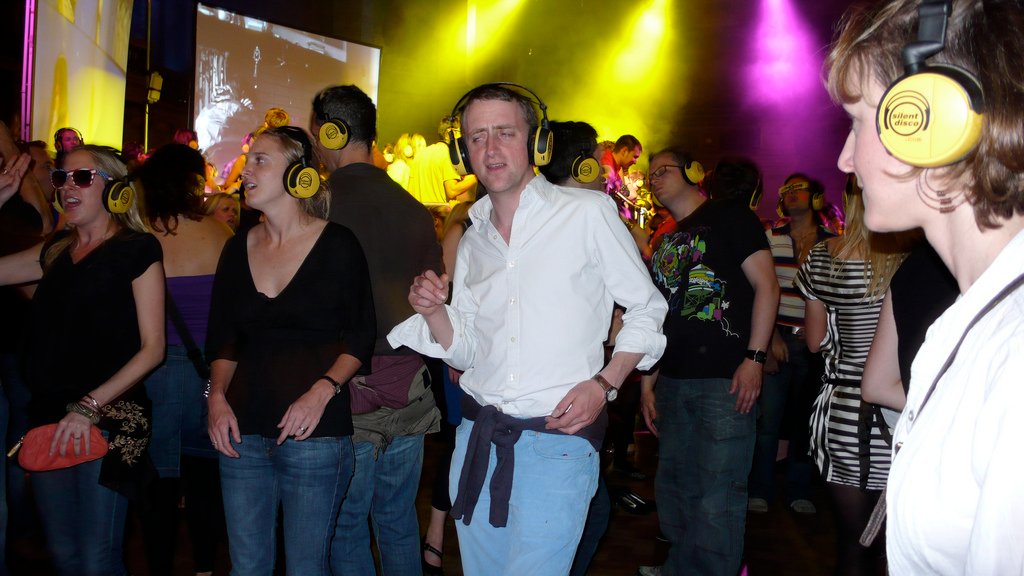
2009
The Edinburgh Fringe and silent theatre
A silent disco fills the McEwan Hall at the Edinburgh Festival Fringe. In England, a theatre company stages a silent play in a car park. Silent formats spread beyond dancing.
Into the dictionary
In February 2011, the Oxford Dictionaries website adds “silent disco”. The idea is now part of everyday language.
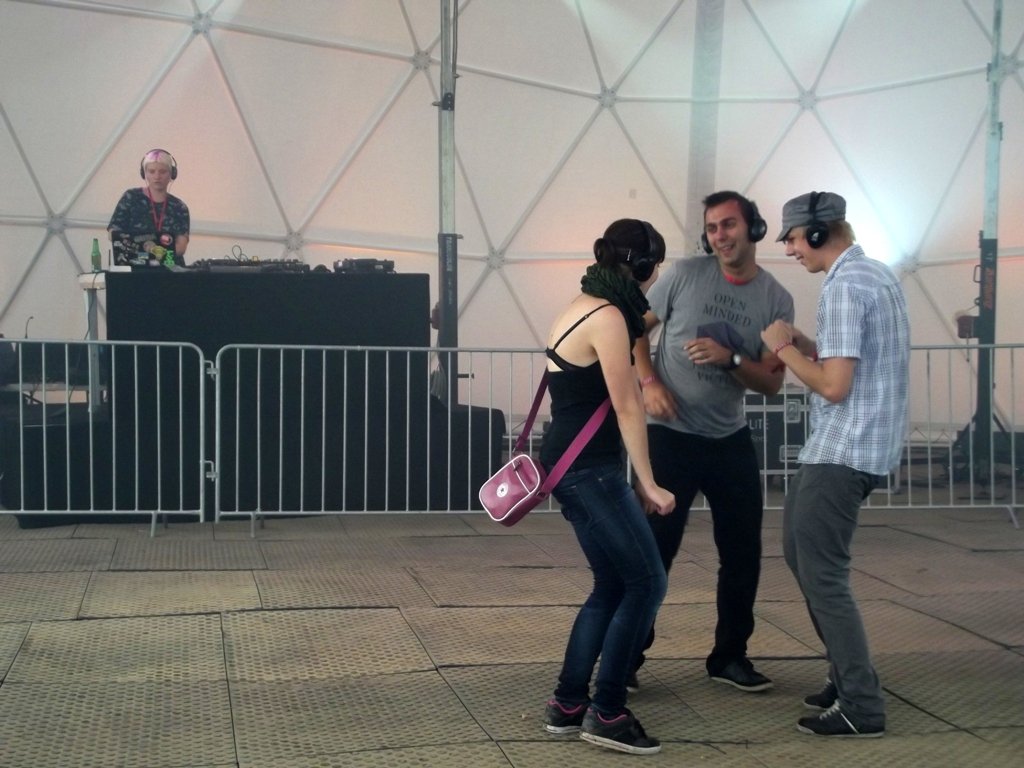
2012
A festival staple worldwide
Silent discos appear at festivals across the world, from Kraków to Tennessee, and Kid Koala takes a headphone concert on tour. Systems now offer several channels, so groups can choose different music in the same room.
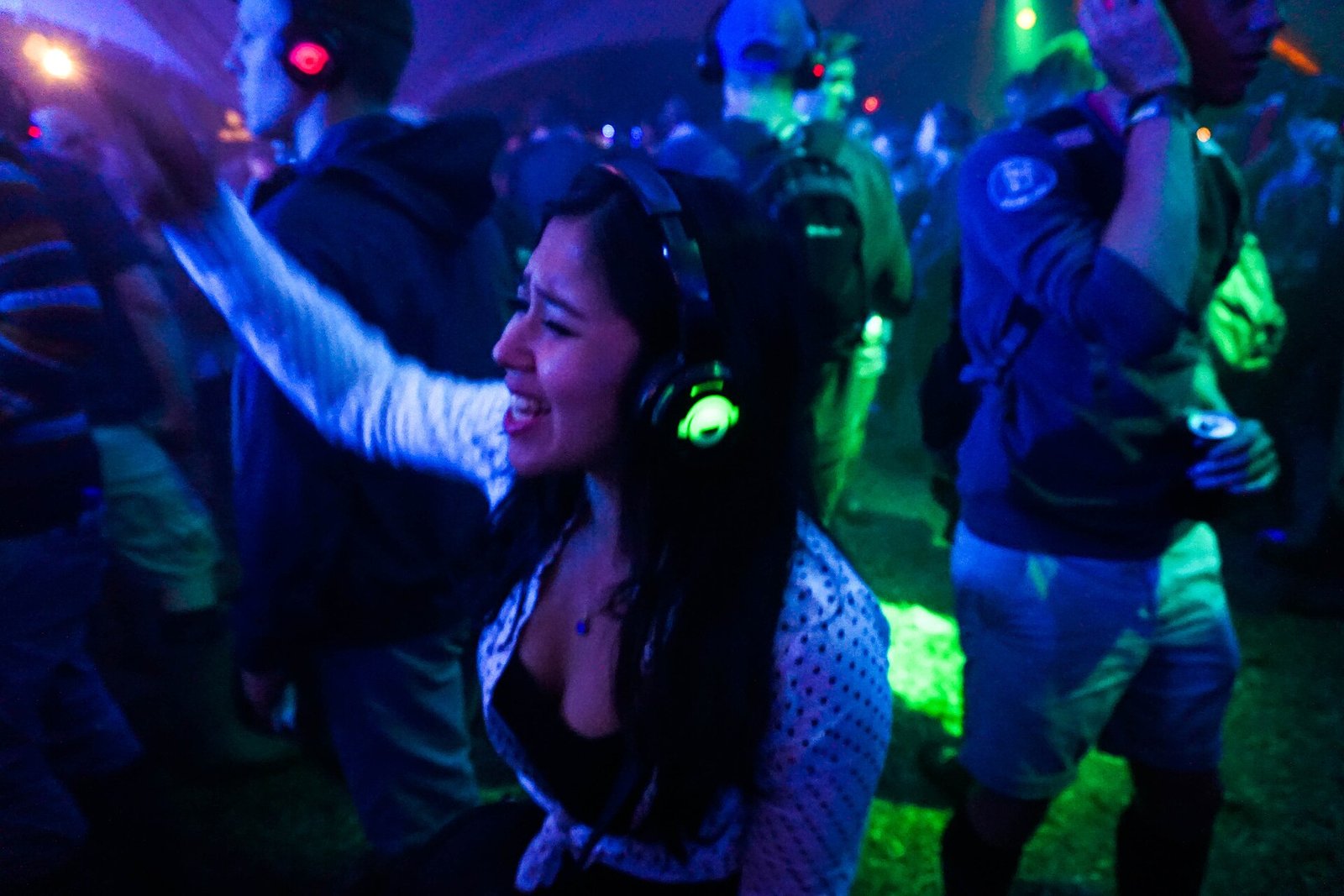
2013 to 2016
Beyond the dance floor
Metallica plays in Antarctica using headphones to protect the environment (2013). Lincoln Center lets audiences switch between a live show and its film soundtrack (2015). Bands perform on streets where amplifiers are banned (2016), and Glastonbury has a silent disco corner.
Quiet, even in a crisis
During COVID-19, audiences watch performances from the pavement through silent disco headphones. In 2024, silent discos are staged in historic cathedrals across the UK and Europe, sparking debate about where they belong.
Silent disco, built for India
Nokomoto designs BIS and WPC certified RF/UHF silent disco headsets and transmitters for clubs, weddings, campuses and corporate events across India. Kits start at 10 headsets and go up to 200, with 2 to 3 channels and up to 500 metres of range. Our Tago, Refr and Lyrx tools help organisers hand out headsets faster, reward referrals and run events in many languages.
Sources and image credits
Timeline facts were compiled from the Wikipedia article Silent disco and the sources it cites, cross-checked against Dictionary.com and HUSHconcerts. Where sources disagree on exact dates, we used the best documented one. Photographs come from Wikimedia Commons and are used under their free licences, credited under each image: CC BY 2.0, CC BY-SA 2.0, CC BY-SA 4.0 or public domain.